- Hatha Yoga
- Vinyasa Yoga
- Ashtanga Yoga
- Iyengar Yoga
- Yin Yoga
- Restorative Yoga
- Kundalini Yoga
- Power Yoga
- Bikram Yoga
- Hot Yoga
- Yoga Nidra
- Prenatal Yoga
- Chair Yoga
- Aerial Yoga
- Sivananda Yoga
- Jivamukti Yoga
- Raja Yoga
- Bhakti Yoga
- Karma Yoga
- Jnana Yoga
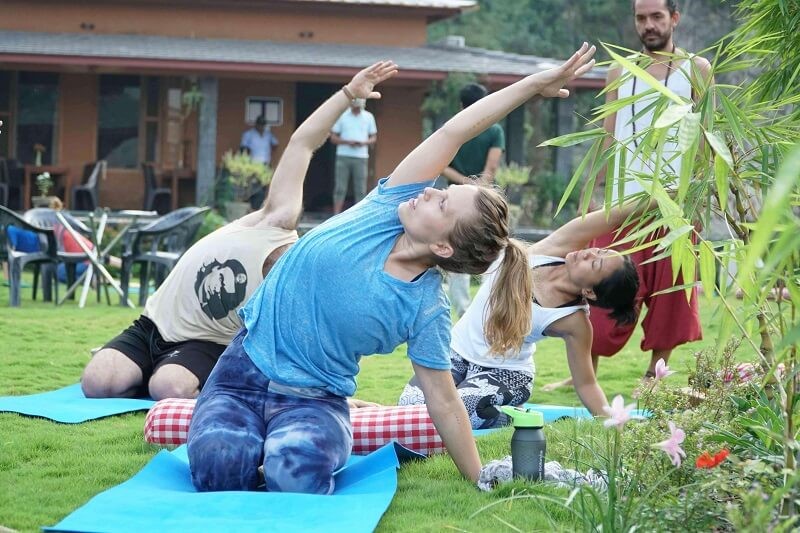
Types of Yoga: A Guide to the Different Styles
There are many different types of yogasanas based on thousands of years of practice. These include easy and peaceful forms, and more intense versions that help you develop strength and endurance.
If you are curious about the different types of yoga, the answer depends on what type of practice you are interested in, whether it be modern physical practices, traditional spiritual paths, or therapeutic yoga.
Knowing what the different types of yoga are can assist you in selecting a practice that fits your objectives, abilities, and interests. Whether you are looking for relief from stress, increased flexibility, weight loss, strength training, or growth of your spirit, there is a type of yoga available for you to explore.
How Many Types of Yoga Are There?
Many people ask, how many types of yoga are there?
The total number of types of yoga does not have a standardised answer. However, most yoga schools and practitioners can agree on 15-20 different types of yoga that are recognised globally
List of Yoga Types
Yoga Styles at a Glance
| Yoga Style | Pace | Difficulty | Best For | Props Required |
|---|---|---|---|---|
| Hatha | Slow | Beginner | Learning fundamentals | Optional |
| Vinyasa | Moderate-Fast | Beginner to Intermediate | Fitness and flow | Minimal |
| Ashtanga | Fast | Advanced | Discipline and strength | Minimal |
| Iyengar | Slow | Beginner to Intermediate | Alignment and technique | Common |
| Yin | Slow | Beginner | Flexibility and recovery | Optional |
| Restorative | Very Slow | Beginner | Stress relief | Common |
| Kundalini | Moderate | Beginner to Intermediate | Energy and meditation | Minimal |
| Power Yoga | Fast | Intermediate | Strength and fitness | Minimal |
| Bikram | Moderate | Intermediate | Stamina and sweating | Minimal |
| Hot Yoga | Varies | Beginner to Advanced | Flexibility and endurance | Minimal |
This guide provides a general overview of the major types of yoga. The different types of yoga mostly differ in pace, intensity, purpose, and teaching style.
Physical Yoga Styles (Modern Practice)
Most people today associate yoga with physical movement, breath control, stretching, and general health. All forms of yoga share a common ancestry. However, the methods by which they are practised are unique to individual practitioners.
Hatha Yoga
The most common type of yoga is Hatha Yoga. Hatha is typically practiced at a slower pace in studios; therefore, the classes are great for beginners because they help develop proper alignment through the use of foundational postures, breath techniques, and increased awareness of the body.
Vinyasa (Flow) Yoga
Vinyasa Flow interconnects the breath, the body and the flow of postures into one continuous sequence. Vinyasa is gaining popularity over many other styles of yoga because it combines all four dimensions of yoga fitness (flexibility, strength, balance, and cardiovascular) into one session.
Ashtanga Yoga
This type was first developed at the turn of the 20th century. As described above, it requires a lot of commitment and physical demand. The structure is rigidly established, so you will not be able to deviate from the sequence of poses when doing a class.
Iyengar Yoga
Similar to Ashtanga Yoga, Iyengar is characterised by using specific techniques when practising postures; however, the emphasis in Iyengar Yoga is placed on precise alignment and technique rather than speed. Props are used as necessary to assist students in achieving proper alignment.
Yin Yoga
The primary objective of Yin Yoga is to hold postures for an extended period. This is with attention directed to the body’s connective tissues, i.e., ligaments, fascia and joints, as opposed to muscle development. Yin Yoga seeks to promote healing through a meditative approach.
Restorative Yoga
Restorative yoga is a practice focused on achieving deep relaxation through the use of props to support your body while you are in restful positions.
Kundalini Yoga
Kundalini yoga incorporates yoga postures, breathing, meditation, chanting, and mantras for awakening and directing the energy within. It is a more holistic approach to body, mind, and spirit development than the typical physical-based yoga classes.
Power Yoga
Power yoga is a contemporary fitness-oriented form of yoga based on Ashtanga yoga. It has a fast-paced and physically demanding practice with strength-building and more advanced postures. If you want to use yoga practice to help you lose weight or to condition yourself for sports, power yoga is one of the most physically demanding types of yoga you can do.
Bikram & Hot Yoga
While they are often thought of as the same thing, Bikram and hot yoga are two different types of yoga.
Bikram yoga follows a specific sequence of postures 26, along with 2 breathing techniques, all performed in a hot room.
Hot yoga is any yoga practiced in a heated environment, and the sequence will differ based on the instructor and style of class.
Other Yoga Styles
Yoga Nidra
Yoga Nidra can also be referred to as yogic sleep. This type of guided meditation can help people find deep relaxation (physically, mentally, and emotionally). Unlike a traditional yoga class, where your body moves, most of the time, you will find yourself lying comfortably on the floor practising Yoga Nidra.
Prenatal Yoga
This type of yoga is designed specifically to support women during pregnancy. The classes will include gentle stretching, breathing techniques, pelvic awareness, and relaxation techniques to help prepare women for childbirth.
Disclaimer:
Any pregnant woman before starting any yoga/exercise programme should speak with their healthcare provider first.
Chair Yoga
Chair yoga is a form of yoga that has modified traditional yoga postures, so they can be performed while seated or using a chair for support.
This accessible practice is especially helpful for:
- Seniors
- People with mobility limitations
- Office workers
- Individuals recovering from injury
- Beginners seeking a gentle introduction
Chair Yoga is an example of how yoga can be modified to accommodate almost any practitioner.
Aerial Yoga
This type of yoga combines traditional yoga poses with the use of a suspended hammock made out of fabric. The hammock provides balance when doing yoga, allowing people to do deeper stretches and perform poses that would be difficult to do on the ground. Aerial yoga also builds core strength and improves flexibility.
Sivananda Yoga
A traditional form of yoga, Sivananda yoga is based on the teachings of the Swami Sivananda. Sivananda classes are typically structured in the same manner every class. This will include pranayama (breathing techniques), relaxation techniques, sun salutations and a set sequence of asanas (postures).
Jivamukti Yoga
Jivamukti yoga combines both asanas and philosophy, meditation, music and ethical teachings. Classes are very dynamic and physically intense but can also include deeper concepts associated with yoga, including compassion, being mindful and being self-aware.
The Traditional & Spiritual Paths of Yoga
"Yoga is the journey of the self, through the self, to the self."
- The Holy Bhagavad Gita
Typically, modern-day yoga classes are primarily for physical movement & training, whereas traditional yogas have many spiritual paths, which are used to aid in the personal growth of the individual and to assist an individual's realization of their own true self.
These spiritual paths for traditional yoga are the philosophical basis of yoga and are commonly known as the four yoga paths.
Raja Yoga
The practice of Raja Yoga is typically linked to meditation and mental training, in addition to the Eightfold Path of Patanjali's Yoga Sutra.
As a dedicated practitioner of Raja Yoga, the individual becomes increasingly mindful, self-aware, and focused by:
- Meditation
- Ethical living
- Breath control
- Mental discipline
Raja Yoga is one of the more complete forms of classical yoga, according to many people.
Bhakti Yoga
The practice of Bhakti Yoga is based on devotion. Bhakti practitioners develop a sense of love, gratitude, and connectedness with their divine source through prayer, chanting, devotional singing, and worship.
The goal of Bhakti Yoga is to achieve a strong connection with the divine through heartfelt devotion.
Karma Yoga
The practice of Karma Yoga focuses on performing selfless acts of service.
Karma practitioners complete their work with awareness, compassion, and without attachment to anything that may result from their actions.
Karma Yoga teaches:
- Service
- Humility
- Responsibility
- Mindful action
Jnana Yoga
Jnana Yoga is wisdom and knowledge-based yoga.
People practice Jnana Yoga by asking themselves questions and then trying to understand their own true existence, their awareness of themselves, or their concept of reality through study, contemplation and self-exploration.
Jnana Yoga is typically considered the most cerebral of all the traditional styles of yoga.
Tantra Yoga
Tantra Yoga is a path to develop awareness through combining body, breath, energy and consciousness.
The traditional Shakta-Shaiva Hindu Tantra, which originated in India, is primarily concerned with achieving a spiritual transformation, not the popular misconception associated with the term.
Mantra Yoga
Mantra Yoga is one that focuses on using sound, syllables and chants (mantras) to bring the mind into focus and create a deeper level of awareness.
People use mantras over and over to help bring them out of the state of distraction caused by surviving mentally, and assist them when they meditate.
Which Type of Yoga Is Right for You?
Deciding which type of yoga is best for you can depend on your individual goals, level of fitness and your preferences as well.
For Beginners
If you are looking for which yoga style is best for beginners, consider:
- Hatha Yoga
- Chair Yoga
- Sivananda Yoga
These three styles offer gentle movements and emphasize developing the strength and stability to execute basic postures safely before advancing to a more intermediate level.
For Flexibility
If your goal is improved mobility and stretching, the best yoga style for flexibility includes:
- Yin Yoga
- Hatha Yoga
- Hot Yoga
These three styles help you achieve improvement over an extended period, where you will develop an increased range of motion.
For Weight Loss
Many people ask, what yoga style is best for weight loss?
The most physically demanding options include:
- Power Yoga
- Vinyasa Yoga
- Ashtanga Yoga
These styles of yoga are more rigorous than the previous styles and will elevate your heart rate, resulting in greater calorie burn.
For Stress Relief
If relaxation is your priority, consider:
- Restorative Yoga
- Yoga Nidra
- Kundalini Yoga
These styles have a calming effect upon your nervous system and support overall mental wellness.
For Strength Building
To build strength and endurance, consider:
- Power Yoga
- Ashtanga Nidra
- Vinyasa Yoga
These three types of yoga will create muscle challenge and build balance and coordination.
Quick Tip:
Don't pick a yoga style just because it is popular, particularly if you are a novice. To establish the proper breathing techniques, alignment and base postures, you should start with Hatha Yoga or Sivananda Yoga before moving onto more vigorous methods like Ashtanga Yoga or Power Yoga.
Types of Yoga in India (and at Rishikesh Yogpeeth)
Yoga has its roots in the Indian subcontinent, where most of the popular forms and styles of yoga have originated throughout history.
There are many yoga practitioners from around the world who are travelling to Rishikesh Yogpeeth in India to study these different yoga styles, so they can also learn about yoga through its cultural and philosophical background.
Traditional schools often teach a combination of:
- Hatha Yoga
- Ashtanga Nidra
- Kundalini Yoga
- Meditation
- Pranayama
- Yoga philosophy
A complete, traditional yogic education is not just a physical exercise but includes the overall principles that support your individual growth and self-awareness.
At Rishikesh Yogpeeth, students will experience both modern and traditional styles of yoga, while at one of the most prestigious yoga experience destinations in the world.
Amazing Fact:
Yoga is often viewed as a physical activity, but the postures are only a small portion of traditional Yogic practice. There are many paths to Yoga as found in ancient yogic texts including the path of devotion, the path of selfless action, and the path of meditation and wisdom.
Style-vs-Style Comparisons
Hatha vs Vinyasa Yoga
Hatha vs Vinyasa Yoga is one of the most common comparisons for beginners.
| Hatha Yoga | Vinyasa Yoga |
|---|---|
| Slower pace | Faster pace |
| More instruction | Continuous movement |
| Beginner friendly | Moderate intensity |
| Focus on fundamentals | Focus on flow |
Ashtanga vs Vinyasa Yoga
| Ashtanga Yoga | Vinyasa Yoga |
|---|---|
| Fixed sequence | Changing sequences |
| Structured practice | Flexible practice |
| More disciplined | More creative |
| Higher intensity | Variable intensity |
Yin Yoga vs Restorative Yoga
| Yin Yoga | Restorative Yoga |
|---|---|
| Deep stretches | Deep relaxation |
| Targets connective tissue | Targets nervous system recovery |
| Mild sensation | Maximum comfor |
| Improves flexibility | Reduces stress |
Bikram vs Hot Yoga
| Bikram Yoga | Hot Yoga |
|---|---|
| Fixed 26-posture sequence | Various sequences |
| Standard format | Flexible format |
| Specific method | Broad category |
| Consistent experience | Teacher-dependent experience |
Frequently Asked Questions
What is the easiest type of yoga?
Hatha Yoga, Chair Yoga, and Restorative Yoga are some of the easiest styles of yoga to do since they are slow-paced and primarily include basic movements.
What is the hardest type of yoga?
Ashtanga Yoga and advanced Power Yoga are widely considered the most challenging types of yoga because they require a lot of strength and balance.
What kinds of yoga are there?
There are many different types of yoga including Hatha, Vinyasa, Ashtanga, Yin, Kundalini, Iyengar, Power, Bikram, and Raja and Bhakti, with the last two being mainly about spirituality.
Is yoga a type of exercise?
Yes. Although yoga is frequently used as a form of exercise, traditional practices also include breathing techniques, meditation, morality, and religion.
What are the main types of yoga?
The main types of yoga include Hatha, Vinyasa, Ashtanga, Iyengar, Yin, Restorative, Kundalini, Power, Bikram, and Hot Yoga.
Which yoga style is best for beginners?
Hatha Yoga is typically recommended as the most suitable beginner level style of yoga to learn basic postures and breath control, at a slower pace than other types of yoga.
Which yoga is best for flexibility?
Yin Yoga is considered by many to be one of the top types of yoga for increasing flexibility and ability to move through joint ranges of motion.
Which yoga helps with weight loss?
Power yoga, Ashtanga yoga, and Vinyasa yoga are among the top types of yoga that can help support weight management.
What types of yoga are practised in India?
The different styles of yoga that are historically found in India include Hatha, Ashtanga, Kundalini, Raja, Bhakti, and Kriya; all of which are practiced in various ways or methods depending on the history and tradition of each.
What is the difference between Hatha and Vinyasa Yoga?
Hatha yoga tends to focus more on holding a pose alone rather than linking movement and breath together in a flowing format as compared with Vinyasa yoga.
Train in These Yoga Styles with Us
The first step in discovering an appropriate style of yoga is to learn about each style. Once you know more about the style of yoga that aligns with your goals, then begin to learn from knowledgeable instructors or centres like Rishikesh Yogpeeth. By doing so, you will increase your understanding of yoga by learning from people who know how to teach yoga.
Experience and be a part of the yoga teacher training classes and yoga retreats at Rishikesh Yogpeeth to learn authentically and with all of your heart.